

Finding and Formulating Hypotheses
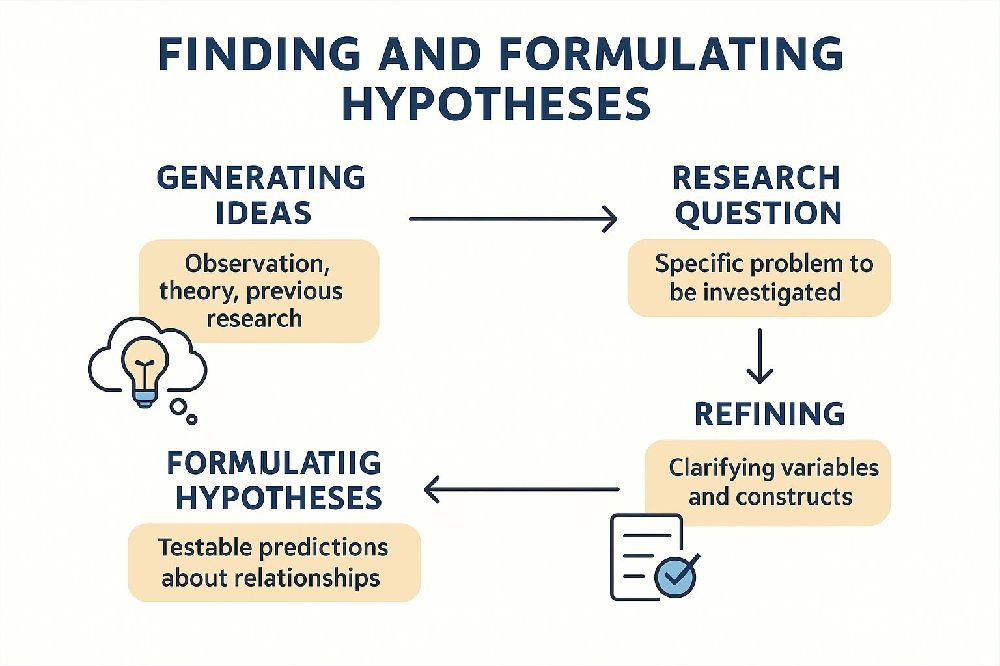
Finding and formulating hypotheses is a crucial early step in the research process. Before conducting experiments or analyzing data, researchers must identify potential relationships or phenomena worthy of study. This process often begins with careful observation, literature reviews, and a deep understanding of the existing body of knowledge within a field. By critically evaluating what is already known, researchers can pinpoint gaps that new hypotheses might address.
Once a potential area of inquiry is identified, researchers move on to formulating a clear and testable hypothesis. A well-structured hypothesis should be specific, measurable, and framed in a way that allows for empirical testing. This step often involves transforming broad research questions into precise statements that define the expected relationship between variables. The clarity of this formulation is what allows subsequent research to be carried out systematically and effectively.
In many cases, the process of finding and formulating hypotheses is iterative. Initial hypotheses may be refined or adjusted based on preliminary data or feedback from peers. Researchers may also rely on theoretical frameworks, which provide a foundation for developing hypotheses that are both scientifically sound and logically coherent. This iterative process ensures that the final hypothesis is not only testable but also meaningful within the context of the broader research landscape.
Ultimately, the ability to find and formulate effective hypotheses is a skill that grows with experience. It requires a combination of creativity, critical thinking, and methodological rigor. By carefully crafting hypotheses, researchers establish a roadmap for their investigations, ensuring that their work is guided by clear objectives and grounded in scientific reasoning. This stage lays the foundation for valid, reliable, and impactful research outcomes.